

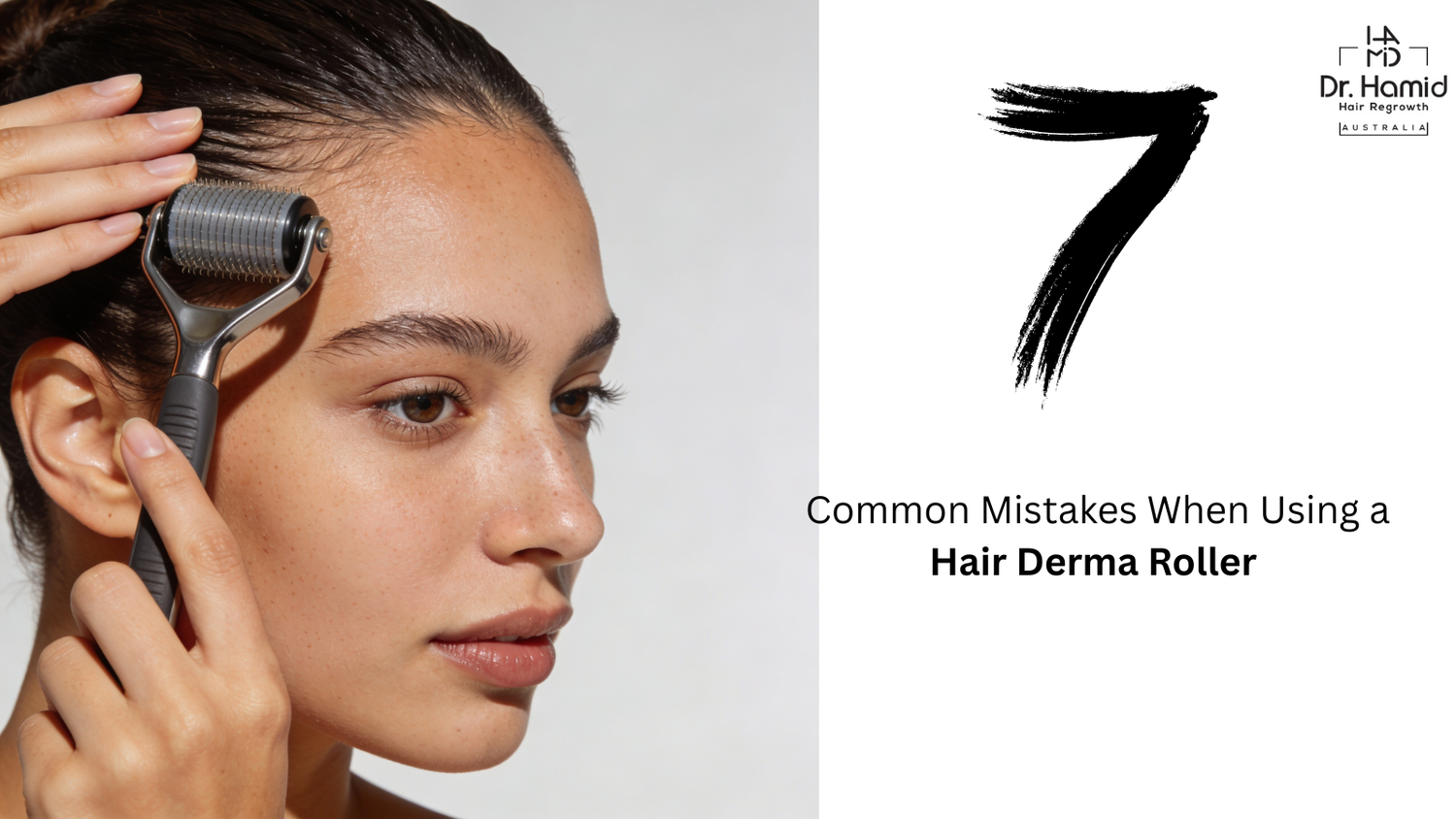
7 Common Mistakes People Make When Using a Derma Roller for Hair Growth (and How to Avoid Them)

This article is written by Dr Hamid Hosseini, GP, based on clinical experience and current hair care research.
If you're using a Derma Roller for hair growth but not seeing results, you may be making common mistakes. From using too much pressure to overusing the device, these derma roller mistakes can reduce effectiveness or irritate your scalp. In this guide, we cover the 7 most common derma roller mistakes and how to fix them for better, safer results.
The Hair Regrowth Derma Roller is one of the simplest yet most effective tools to stimulate your scalp, boost circulation, and enhance the absorption of growth-promoting nutrients. When combined with Dr Hamid Hair Regrowth Serum, it can help awaken dormant hair follicles and support thicker, healthier hair.
You’ve got a hair derma roller and you’re using it regularly, hoping to finally see progress. But weeks have passed, and nothing’s really changing. Here’s the thing: it’s probably not the roller that’s the problem. It’s how you’re using it.
Getting the best results from your derma roller means avoiding a few common missteps. It’s easy to get it wrong, and simple errors can slow your progress or even irritate your scalp. The good news? These pitfalls are easily avoided. By using the right technique and staying consistent, you can safely unlock the full potential of microneedling for your hair.
Let’s explore the seven most common mistakes people make when using a derma roller for hair growth and how you can get the best results safely and effectively.

Mistake #1: Not Preparing the Scalp Properly
Preparing your scalp is an essential first step before using a derma roller. Many users overlook this critical step, rushing directly into the procedure. However, proper preparation can significantly improve the effectiveness of microneedling.
A clean and healthy scalp sets the stage for optimal results. Begin by washing your hair to remove any dirt or oil that might obstruct the roller. Use a mild shampoo to avoid irritation.
Essential steps for scalp preparation include:
- Cleansing: Ensure your scalp is free from products and oil.
- Drying: Gently pat your hair dry; avoid using the roller on wet hair.
- Checking: Look for any open wounds or inflammation before rolling.
💡 Quick tip: If you use styling products frequently, wash your hair with a clarifying shampoo the day before to get your scalp completely clean.
Skipping these steps increases the risk of irritation and can limit your progress. A little preparation goes a long way toward ensuring a safe and effective microneedling session.

Mistake #2: Pressing Too Hard (Ouch!)
The myth: “If I press harder, it’ll work better.”
The reality: Too much pressure only damages your scalp and can make hair loss worse.
The right way to use your derma roller:
- Pressure: Roll or tap gently; you shouldn’t need to push hard at all.
- Direction: While rolling, go vertical, horizontal, and diagonal over each area in hair growth direction.
- How many times: About 6–8 rolls or taps per section is enough.
- Speed: Go slowly; rushing makes it easy to catch and pull your hair.
What it should feel like: A bit tingly or slightly uncomfortable, but not painful. If it hurts or you see blood, you’re rolling too hard or tapping too strongly. Your scalp should look slightly pink afterwards, like a mild sunburn, but not bright red or bleeding.
Mastering the correct technique takes practice, but it’s vital for maximising the benefits of microneedling. With patience and consistency, you’ll see improved scalp health and hair growth over time.
Using a derma roller for hair growth correctly is important to avoid scalp damage and improve results.

Mistake #3: Overusing the Derma Roller
It’s easy to think that rolling or tapping more often will lead to faster hair growth. However, overusing your derma roller can irritate the scalp and slow progress. Your skin needs time to heal and regenerate between treatments.
For most people, using the derma roller twice a day is sufficient. This frequency allows for optimal stimulation and recovery.
For best results:
- Use once or twice daily and allow healing between sessions.
- Monitor your scalp for irritation and adjust frequency if needed.
- Give your scalp rest days in the case of skin injury or irritation to rejuvenate and respond positively.
Signs you’re overdoing it:
- Redness that lasts more than a day.
- Extra scalp sensitivity.
- Flakiness or peeling.
- Increased hair shedding.
Many people wonder how often to use a derma roller for hair, but overuse can slow progress instead of improving it.

Mistake #4: Missing the Post-Treatment Opportunity
After rolling or tapping, your scalp is more receptive to topical treatments. Ignoring this step means missing a major chance to boost results. The micro-channels created by the roller allow products to penetrate deeper and work more effectively.
To make the most of your session:
- Use Derma Roller immediately before and after applying Dr Hamid Hair Regrowth Serum; it’s designed to absorb quickly and deliver vital nutrients to your follicles.
- Dr Hamid Hair Regrowth Serum has essential oils like rosemary or peppermint that promote circulation.
- Finish with a hydrating, nourishing scalp treatment to restore moisture and calm the skin.
By taking advantage of this post-microneedling window, you’ll maximise nutrient absorption and accelerate your hair growth results. Learning how to use a derma roller for hair together with a serum can improve your overall routine. For best results, use a derma roller with a hair regrowth serum as part of your routine.
Mistake #5: Not Tracking Your Progress
Hair regrowth takes time, and tracking your progress helps you stay motivated and informed. Without a record, it’s hard to know if your efforts are paying off or if your technique needs adjusting.
Simple ways to track your journey:
- Take regular photos: Use consistent lighting and angles for comparison by taking close-up photos in good and clear lighting conditions.
- Keep a journal: Note changes, scalp reactions, and how your hair feels.
- Record your products: Write down what you use and how it performs.
Tracking your progress helps you identify what works best for your scalp and ensures your microneedling routine stays effective and rewarding.
Mistake #6: Skipping the Aftercare Routine
Your scalp needs special attention after a microneedling session. Post-treatment care is crucial for soothing irritation and encouraging healing.
Essential aftercare steps:
- Apply a soothing serum: Choose products with calming, hydrating ingredients.
- Avoid harsh chemicals: Stay away from strong hair products for at least 24 hours.
- Keep the scalp clean: Gently wash your hair to remove residue after the first 24 hours.
Proper aftercare keeps your scalp healthy and enhances the effectiveness of your serum. It also reduces the risk of irritation and ensures better absorption of active ingredients for continued growth.

Mistake #7: Neglecting to Replace the Roller
Regular replacement of your derma roller is essential for hygiene and performance. Over time, the needles dull and can tug at your hair or damage the scalp instead of stimulating it.
Why it matters:
- Hygiene: Old rollers can harbour bacteria and cause infections.
- Effectiveness: Sharp needles are necessary for precise, gentle micro-stimulation.
- Safety: Dull needles can scratch or pull hair instead of rolling or tapping smoothly.
Replace your derma roller every 3–4 months with regular use. This keeps your treatment safe, clean, and effective, helping you maintain consistent hair growth results.
The Takeaway
The derma roller is a powerful yet gentle tool when used correctly. By avoiding these seven mistakes, skipping scalp preparation, pressing too hard, overusing the roller, missing post-treatment care, failing to track progress, skipping aftercare, and neglecting to replace the Derma Roller, you’ll create the perfect conditions for hair regrowth.
For best results, always pair your derma roller with Dr Hamid Hair Regrowth Serum, formulated with advanced plant-based ingredients to nourish your scalp and support sustainable, healthy growth.
If you’re unsure about your scalp type or how often to roll, consult your healthcare provider, visit our website https://hamita.com.au/ or reach out to our team at Hamita Trading Pty Ltd. We’re here to help you achieve your healthiest hair yet.
When to See a Professional
Derma rolling at home is generally safe, but see a doctor if you experience:
- Pain or bleeding during use, while your technique is correct.
- Redness or itchiness lasting more than two days.
- Signs of infection (pus, swelling, fever).
- Unusual hair loss or persistent scalp irritation.
Dr Hamid Hosseini can create a personalised treatment plan tailored to your scalp and hair condition, helping you achieve optimal results safely.
Last updated: April 2026 | Based on current hair restoration research



Leave a comment
This site is protected by hCaptcha and the hCaptcha Privacy Policy and Terms of Service apply.